Housing at Noon
Thursday, September 17, 2026
The dominant story is the aftermath of the Fed's first rate hike since 2023 — a unanimous 12-0 quarter-point move to 3.75-4% under Kevin Warsh — and its collision with a housing market that was already freezing at 7% mortgage rates.
| You’re reading the free edition of Housing at Noon. Links are disabled, and 5 of today’s 9 themes are only in the premium edition. Upgrade → |
| 1 | Fed hikes into a frozen 7% housing market |
The Federal Reserve raised its benchmark rate a quarter point to 3.75-4% on Wednesday in a unanimous 12-0 vote, its first hike since 2023, with the dot plot signaling at least one more increase this year. Chair Kevin Warsh said he'd be "hard pressed to describe broad financial conditions as restrictive," language the NYT read as clearing the way for further tightening. Housing bore the immediate cost. Warsh defied Trump, who demanded on social media rates be cut to 1% or less and called the board "a bunch of politicians." Stocks slumped and the 10-year Treasury settled above 5% for the first time since July 2007. HousingWire's Logan Mohtashami argued the housing market held up as rates rose from 5.99% toward 6.64%, but above 6.64% — now above 7% — sales can't grow year over year, pinning the blame on the Iran conflict and energy-driven bond yields. Conor Sen's newsletter framed the takeaway as mixed: higher rates hurt builders and buyers, but the Fed is responding to economic strength rather than trying to cause weakness — a lower-recession-risk read even as transaction activity stays depressed. Zillow chief economist Mischa Fisher called the hike "the medicine the housing market needs to recover tomorrow," arguing greater confidence that inflation is contained is more likely to bring mortgage rates lower in 2027, while conceding a "challenged end of the year for home sales." On LinkedIn, Ali Wolf noted mortgage rates near 7.2% had already priced in much of the expected hike (I'd point out that rates *always* price in expected hikes—what moves them around is *changes* in expectations about inflation, growth, and Fed policy). Federal ReserveNYTWSJHousingWireConor SenLinkedIn |
| 2 | Warsh blames AI hyperscaler debt for higher long yields |
Asked what was driving the 10-year Treasury toward 5%, Warsh named AI hyperscalers as one of three causes. Fortune reported he said "the so-called hyperscalers are out in the market raising funding... The competition for capital is real," calling the 10-year "the most important asset anywhere in the world." The scale is large: the five major hyperscalers issued $121 billion in US corporate bonds in 2025 versus a $28 billion average from 2020-24, per BofA, while Morgan Stanley estimates AI-related global debt could approach $570 billion for full-year 2026. Robin Brooks conceded he got the meeting wrong, calling it a "narrative — not a framework — Fed," arguing underlying inflation is slowing once one-off CPI hikes are set aside. My view: I suspect hyperscalers are a red herring (the impact of massive issuance would be seen in credit spreads, not Treasury yields), and that as Brooks argues, this is about the long end of the curve, which risks becoming unanchored without further hikes. FortuneWSJRobinjbrooks |
| 3 | New home sales market remains weak |
Builder confidence fell three points to 32 in September, its lowest since September 2025, according to the NAHB/Wells Fargo Housing Market Index. The share of builders cutting prices rose to 38% and 66% used sales incentives, the highest since December, yet a "strike price" floor remains elusive. The average price cut held at 6% for the sixth straight month, and 42% of builders rated current lot availability as poor. HousingWire reported new-home sales prices hit a 5-year low in July, and that price drops themselves may trigger a "falling knife effect" among buyers waiting for a bottom. The market has not yet found its "bottom," with entry-level buyers idling in "wait and see" mode. NAHB Chairman Bill Owens cited weakening buyer traffic "largely because of rising mortgage rates." This is all happening will costs for builders are rising and labor is scarce (partly due the data center construction demand). Bill McBride flagged a striking line from the NAHB report: in some markets, builders report that increased immigration enforcement is discouraging legal workers from reporting to job sites — a supply-side squeeze layered on top of higher material, gas and diesel costs. MarketWatch's Aarthi Swaminathan summarized it plainly: builders can neither build nor sell amid high rates. Maybe robots can help (see next theme)... NAHBHousingWireXCalculated RiskBlueskyMarketWatch |
| 4 | AI and robots pitched to close construction's labor gap |
The labor shortage motivating the automation push is stark: GM CEO Mary Barra told Fortune that America has a "societal problem" with skilled trades, backing $200 million to train Gen Z for blue-collar work she called more AI-proof than white-collar paths. An estimated 2.1 million skilled-trades jobs could go unfilled by 2030, per the Alliance for America's Skilled Trades, with more than 300,000 new electricians needed over the next decade largely to power the data-center boom. Threatened mass deportations exacerbate the problem, since many constructions workers are undocumented (see below). Amid these staffing challenges, CoStar reported that AI is estimated to be able to cut construction costs by up to 20%, boosting profits and shortening building timelines. On LinkedIn, Jennifer Castenson argued that putting robots to work will help bridge the housing supply gap, tagging NAHB economist Robert Dietz and firms including Dusty Robotics and RENCO USA. But the automation optimism deserves a caveat: earlier this week, Brian Potter examined where construction automation has actually succeeded, noting direct labor is close to 50% of a new single-family home's cost versus 6-8% for a car — but that attempts to automate the process date to 1853. CNBC similarly reported Sept. 12 that robots are attacking the roughly 1.2 million-home shortfall but that humanoid homebuilders remain a long way off. I think Potter is right—labor is a huge chunk of the cost of building a new home, but not only is automation of this kind of physical work likely to take much longer than automation of, say, spreadsheet work, in the places where home prices are highest, the cost of housing is primarily due to the price of land, not the cost of construction. 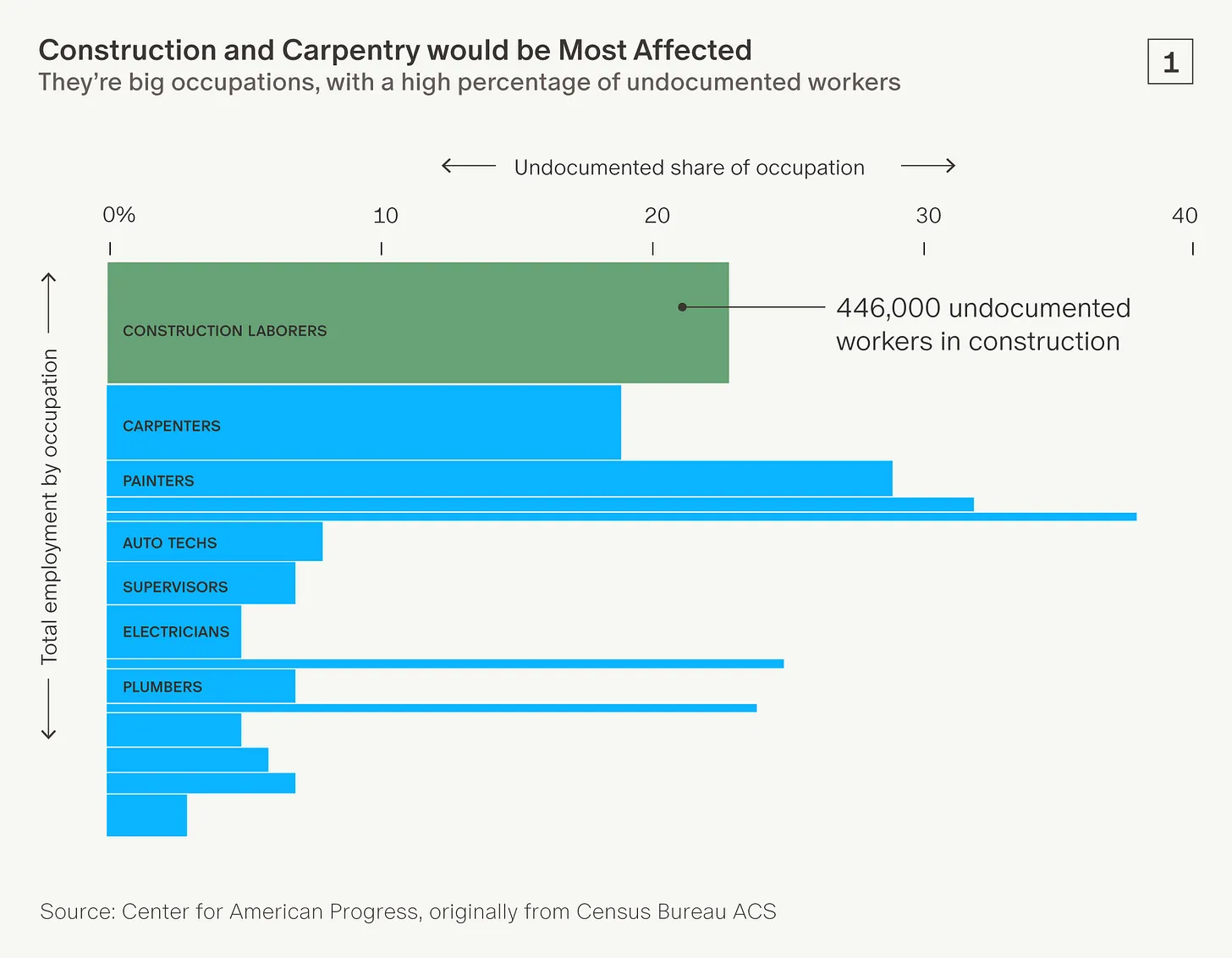 There are over 450K undocumented construction workers CoStarLinkedInFortuneConstruction PhysicsCNBC |
More in the premium edition
Judge lets landlords probe City Hall ahead of Oct. 1 rent freeze Individual investors own 59% of US rental properties Lenders pre-empt FHFA with higher conforming loan limits Tech Workers Return to San Francisco as Airbnb Leases Landmark Office Debating YIMBY 'menu of options' vs. bundled reform packages |
On the Front Pages
Paper of the Day
Haocheng Chen, Xiaolong Liu, and Arno J. van der Vlist Journal of Housing Economics · 2026-09-05 New low-income rental housing in Amsterdam raised nearby house prices, most of all for infill projects in high-income neighborhoods. New low-income rental housing raised the prices of nearby homes in Amsterdam, a city that combines some of Europe's highest housing costs with a historically large stock of low-income rentals. The authors pair home-sales records with city register data that classify each new project as purely low-income, mixed-income or market-rate, which lets them isolate buildings with no market-rate units. The price effect was larger for infill projects than for redevelopment, and larger in high-income neighborhoods with a higher share of native Dutch residents. Because the new units add little to the local supply of homes for sale, the authors attribute the effect to the amenities that come with new construction. For US housing, the result runs against the common objection that subsidized rental buildings lower the value of neighboring homes.
From Home Economics
Recent Publications
Tools
The Pro Map puts Home Economics’ county- and ZIP-level housing data on one interactive map, from prices and rents to migration and permits. Explore the Pro Map →
Recent posts
“The country's biggest and densest cities vote Democratic. Their failure to build more, faster, and cheaper stems mostly from the difficulty of building in dense places, not from ideology.” 160 likes · On X →“Population shifts by age and geography over the last 50 years:
—Children declined everywhere, but esp. in downtowns
—Older Americans are a larger share in the suburbs
—Young adults (25-40) are a *far…” 12 likes · On X →“FiDi has experienced the most rapid population growth since 9/11...(from your own maps!)” 8 likes · On X →| You’re reading the free edition of Housing at Noon. Links are disabled, and 5 of today’s 9 themes are only in the premium edition. Upgrade → |
Housing at Noon · Home Economics
|